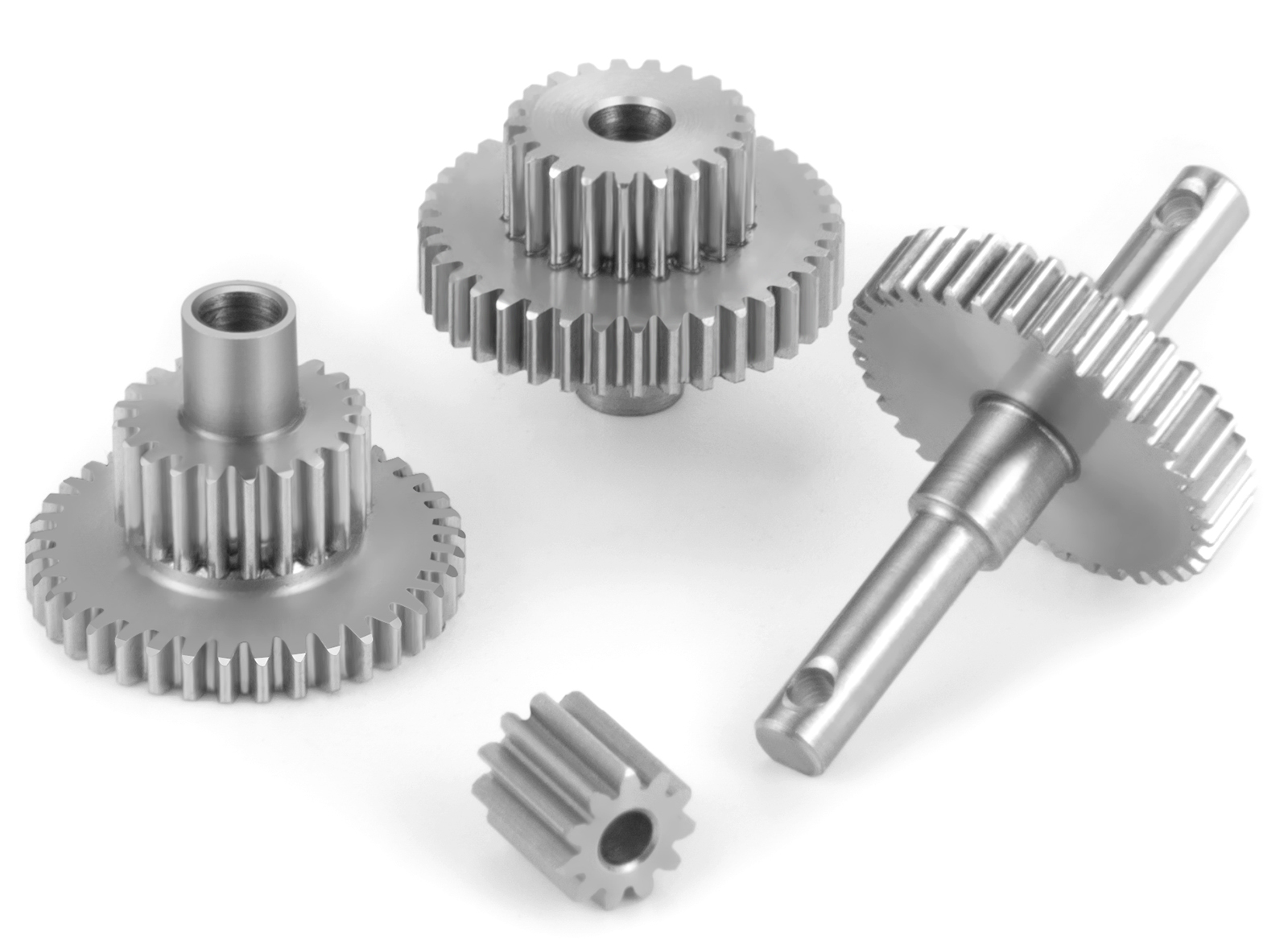
In machinery development and manufacturing, steel cylindrical parts need to meet assembly tolerances while maintaining a surface condition suitable for storage and service. Black oxide is a practical finishing option when a dark appearance and minimal dimensional buildup are important. For CNC-machined parts, its effectiveness depends on how the blackened surface is protected after treatment.
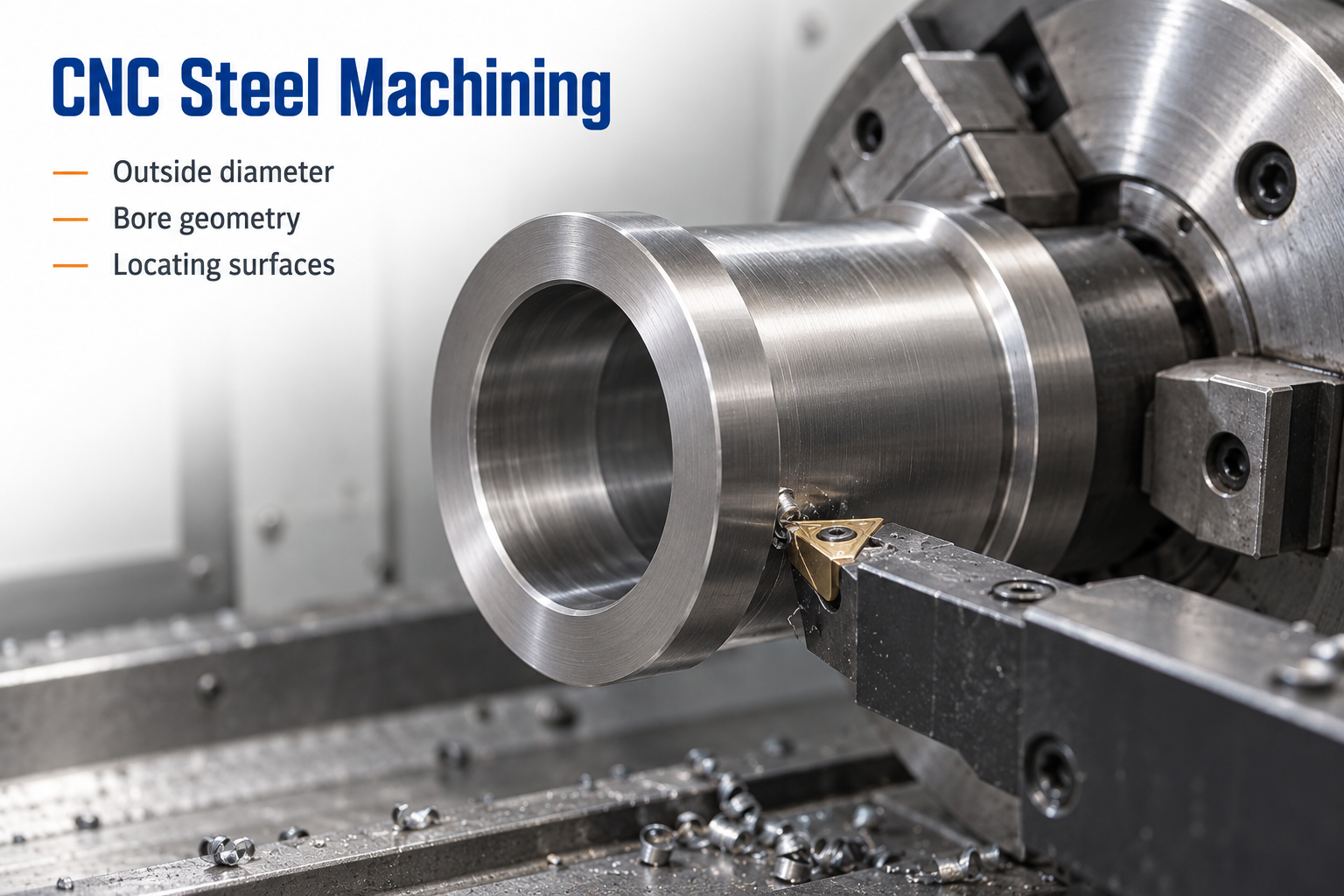
The steel cylindrical components in this example were CNC-machined and then given a black oxide finish. For this type of part, the machining plan needs to account for specified diameters, bores and locating surfaces, while the finishing plan must consider how the parts will be packed, handled and used. A uniform black appearance is only one part of that assessment.
Conventional oxide blackening converts the steel surface into a very thin black oxide layer. This produces a dark finish with very little dimensional buildup, which can be useful for precision components. However, the oxide structure is porous and offers limited corrosion protection by itself. Steel can still rust when moisture reaches the surface.
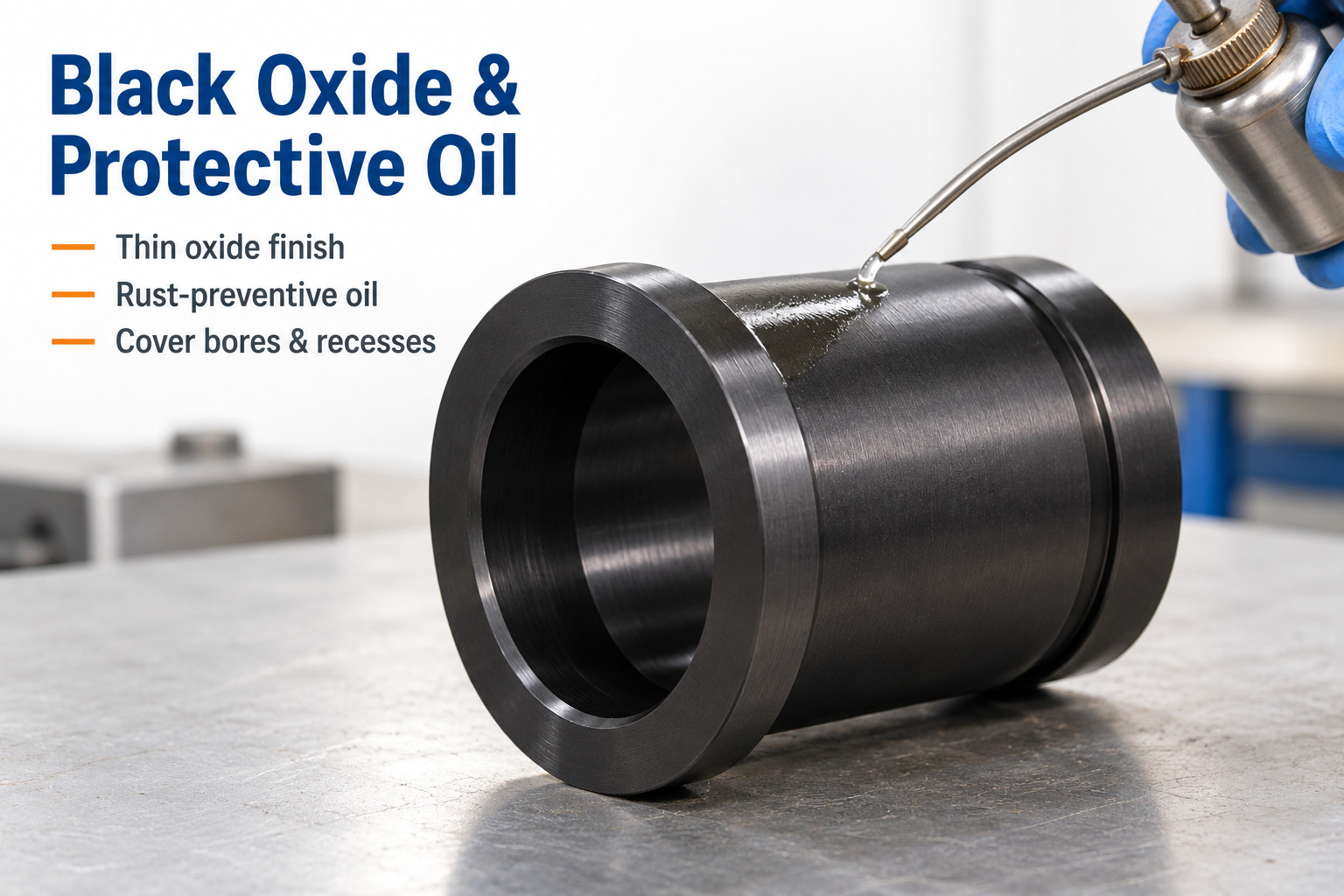
A suitable rust-preventive oil is therefore an essential part of the oil-sealed finish discussed here. The blackened surface holds the oil, which provides much of the barrier against moisture. Depending on the process and part geometry, the oil may be applied by spraying or immersion. Coverage needs attention on both external surfaces and accessible bores or recesses, rather than just the most visible face.
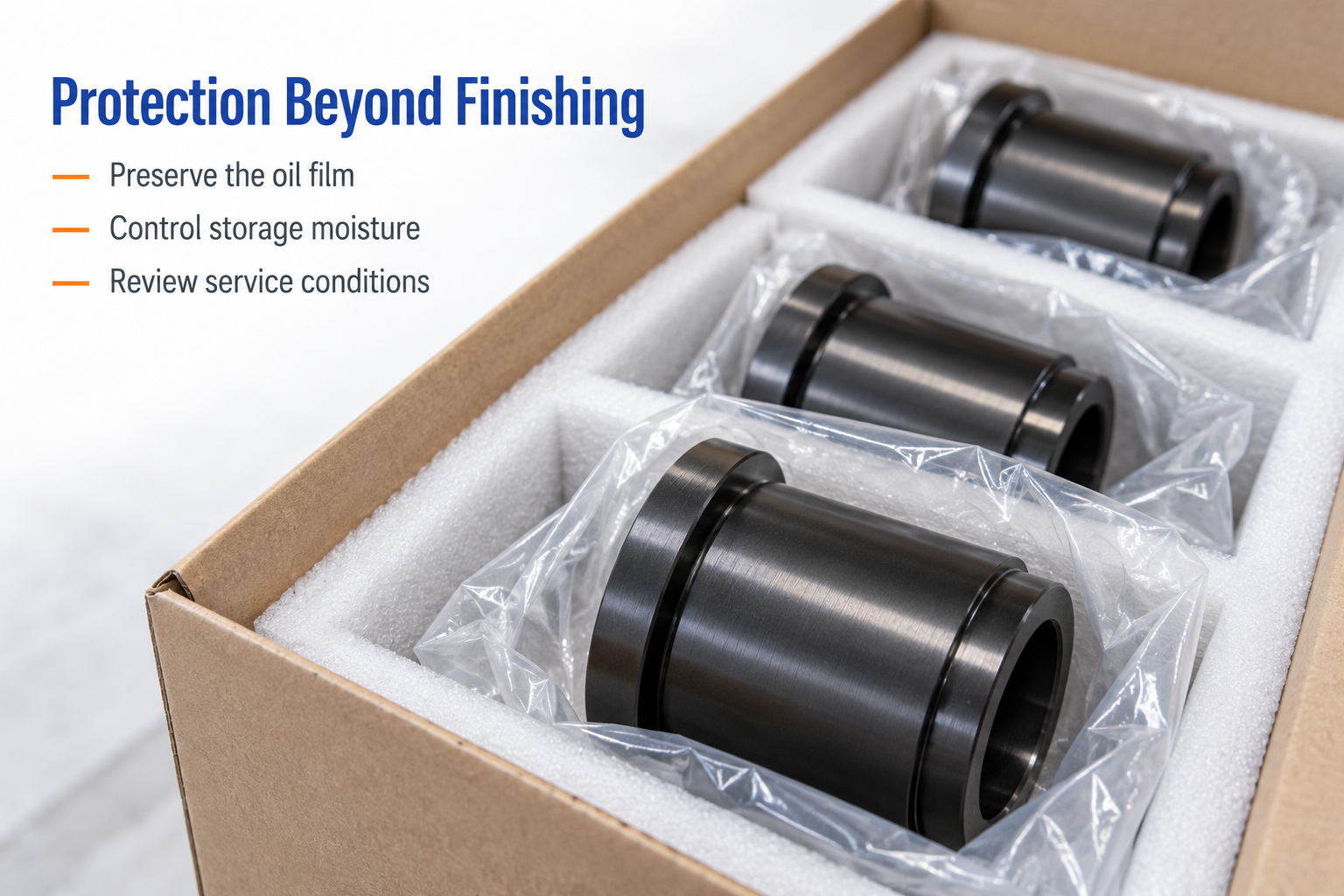
Because protection depends on the oil film, cleaning or handling that removes it can reduce corrosion resistance. Humidity, condensation and storage conditions should also be considered when selecting the preservative and packaging. For parts exposed to persistent moisture, the finishing system should be reviewed against the actual service requirements.
ARES Mold supports custom steel CNC machining for prototypes, functional testing and low-volume production. Project review covers the material, drawing tolerances, machining requirements, surface treatment and inspection needs. For blackened components, we also discuss the required protective finish and handling conditions before delivery.
Send ARES Mold your 3D models and 2D drawings, along with the material, quantity and critical tolerances. If black oxide is required, include the service environment and rust-protection requirements so we can assess the complete machining and finishing plan.