The Precision Limit of Lens Barrel Spacers: How Flat Can Thin-Walled Parts Be Turned?
In optical lens assemblies, the lens barrel spacer is a micro-component with extremely high precision requirements. Its function is to separate two lenses inside the lens barrel, and its end face directly participates in the centering and positioning of the optical system. Many people with assembly experience have encountered this situation: the lens is clearly aligned when installed, but the image quality deteriorates as soon as the pressure ring is locked, and the cause cannot be found after repeated disassembly and assembly. The problem often lies not in the lens, but in the fact that the end face of the spacer has not achieved true flatness.

Take a typical aluminum alloy spacer as an example: it has an outer diameter of 28mm and a thickness of 0.5mm, approximately the thickness of five sheets of A4 paper, requiring an end face flatness of 0.005mm and a parallelism of 0.003mm between the two planes. The most common problems with such thin-walled parts do not lie in the cutting process itself, but in the release of clamping stress and residual stress. During radial clamping, the thin-walled ring undergoes elastic deformation; after turning, when the force is released, the material rebounds, and the flatness is immediately damaged. The initial stress inside the blank is redistributed after a large amount of material is removed, which can also cause secondary deformation. The solution is straightforward: release first, then finish machining. Rough turning leaves a 0.15mm allowance, and the part is removed for natural aging for 24 hours to allow full stress release. For finish turning, soft jaws with copper sheet gaskets are used, and the clamping force is set to the minimum level that prevents slipping. The end face is turned in one pass with a feed rate of 0.03mm/r and continuous supply of cutting fluid. After finish turning, the part is left to stand until its temperature drops completely before being inspected by a coordinate measuring machine (CMM). The measured flatness is within 0.003mm, and the parallelism is 0.0015mm. Finally, it is delivered after ultrasonic cleaning and independent vacuum bag packaging.
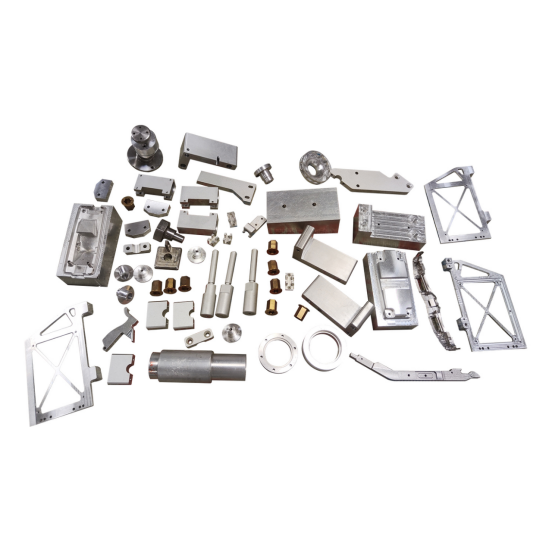
When manufacturing such thin-walled precision parts, there are three easily overlooked links: rushing to finish turning before the stress is fully released, applying a little extra clamping force leading to deformation, and measuring untrue data with the CMM while the part is still hot. By controlling these three links, the yield rate can be stabilized.
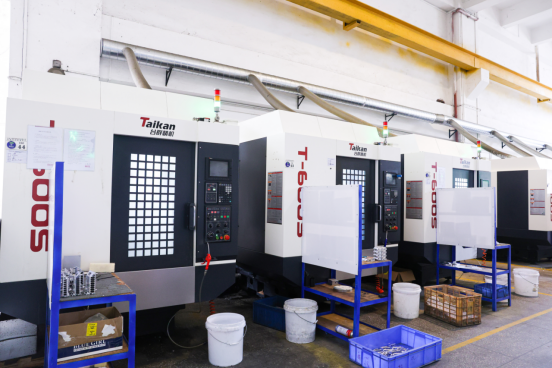
Our workshop is equipped with precision CNC lathes, five-axis machining centers, coordinate measuring machines, and a clean post-processing production line. The entire process from process analysis to finished product delivery is completed within one system. If you have precision parts that need to be processed, please send the design drawings. We will sort out the process route clearly before starting work.